 1-800-529-8255
 1-800-529-8255

 Back
Back
 Premises Accident: $90,000 Recovered
 What Is the Most Fatal Type of Car Crash in California?
When a family contacts us after losing someone in a collision, one of their first questions usually has nothing to...
Read More
8730 Wilshire Boulevard, California 90211 
Get Help Now

Request A free confidential case review

Case Results:
Recently Written:

When a family contacts us after losing someone in a collision, one of their first questions usually has nothing to...
Read More

Most people picture a bicycle accident as a car and a cyclist colliding in traffic. But some of the most...
Read More

A wet floor accident can leave you with more than a painful injury. Medical bills, lost income, ongoing treatment, and...
Read More

A lane-splitting accident can leave motorcycle riders with serious injuries, medical bills, lost income, and other financial losses. So, what...
Read More
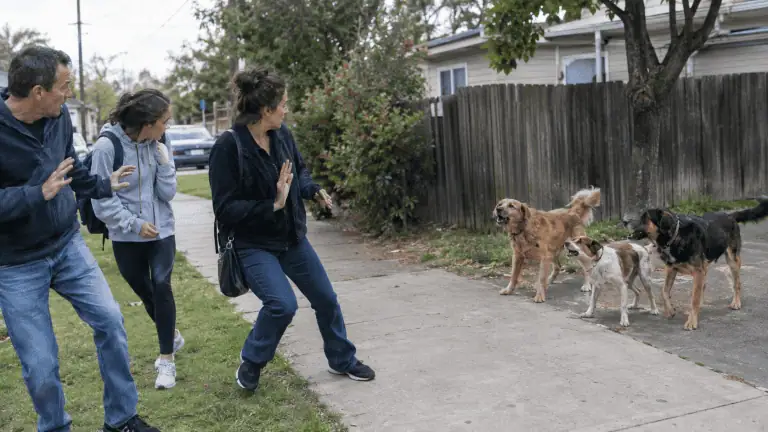
A pack of dogs can cause serious injuries, leaving victims to deal with medical treatment, legal questions, and other consequences....
Read More
Partner with our experienced attorneys and take the first step toward justice.
Get Your Free Consultation
You didn’t ask for this. One moment you were driving normally, and then everything changed. Now you’re managing a damaged vehicle, a body that may not feel right, and an insurance company that’s already calling.
The decisions you make in the next 24 to 72 hours will directly shape your health outcomes, your legal rights, and the compensation you can recover. This guide walks you through each critical step, in order, when a car accident in California was not your fault.
California Vehicle Code §20001–20003 requires every driver involved in a collision to remain at the scene until they have provided their information and confirmed that anyone who needs help has received it. Leaving, even when the accident was not your fault, is a criminal offense.
When you call 911, request police even for minor accidents. A police report is one of the most valuable documents in any injury claim. Request an ambulance if anyone is injured, even if injuries appear minor. Note the responding officer’s name and badge number, and ask how to obtain the final report once it is filed.
Do not move vehicles unless they are creating a serious safety hazard. The position of the cars after impact is physical evidence. Understanding the most common causes of car accidents can also help you recognize what happened and why fault matters so much in the moments following a crash.
This is the step injured Californians most commonly skip, and it causes the most damage to their claims later. Adrenaline masks pain. Whiplash, soft tissue injuries, and traumatic brain injuries frequently produce no symptoms in the first hours after a crash. By the time those symptoms surface, sometimes days later, insurance adjusters will argue the injuries were unrelated to the collision.
Go to an emergency room or urgent care on the same day as the accident. Tell the doctor specifically that you were in a car accident, not simply that you are experiencing pain. Attend every follow-up appointment, since gaps in medical treatment are used by insurers to argue that injuries were not serious. Keep every bill, diagnosis, prescription, and treatment record.
The medical records created within the first 24 to 48 hours become the foundation of your injury claim. Without them, even a legitimate injury becomes very difficult to prove. Consulting a car accident lawyer at this early stage costs you nothing and protects everything.
If you are physically able to do so safely, document everything at the scene. Your smartphone is your most powerful tool at this moment.
Also note the exact time of the accident and write down your own account of what happened while it is still fresh in your memory.
You are legally required to exchange information with the other driver. You are not required to say anything about the cause of the accident, and you should not.
Collect from the other driver: their full legal name and contact information, driver’s license number, vehicle registration and license plate, insurance company name and policy number, and the make, model, and color of their vehicle.
Never say any of the following at the scene: “I’m sorry,” “It was my fault,” “I didn’t see you,” “I wasn’t paying attention,” or “I think I ran the light.” Even a casual apology can be used as an admission of liability. California’s comparative fault rules mean that anything you say about fault can directly reduce your compensation.
What you can say: “Here is my insurance information,” “I would like to see your license,” “I have called the police,” and “I will let the investigation determine fault.”
California Vehicle Code §16000 requires you to file an SR-1 form with the DMV within ten days if the accident caused injury, death, or property damage exceeding $1,000. This applies even when the other driver was entirely at fault.
If police responded to the scene, a report will be filed automatically. Get the report number before leaving and request a copy through the responding agency’s website once it is available, typically within five to ten business days.
Notify your own insurer that an accident occurred, as this is a standard policy requirement. Stick to the basic facts: date, time, location, and the other driver’s information. Do not speculate about fault or the extent of injuries at this stage. Families who have lost a loved one in a serious crash should also be aware of potential wrongful death claims, which follow a separate legal process with its own filing deadlines.
The other driver’s insurance company will call you quickly. They will be polite and professional. They will ask if they can take a recorded statement to help process your claim.
Decline. Politely but firmly. Insurance adjusters are trained interviewers whose primary objective is to minimize the payout on your claim. A recorded statement can be taken out of context or used to catch inconsistencies. You may not yet know the full extent of your injuries. Anything you say about your pain levels today can be used to dispute injuries that emerge next week.
You are not legally required to give a recorded statement to the other driver’s insurer. When they call, tell them you are seeking medical treatment, consulting with an auto accident attorney, and that all future communications should come in writing.
California’s statute of limitations gives most accident victims two years from the date of the collision to file a personal injury lawsuit (CCP §335.1). That may feel like a long runway, but the evidence that wins cases disappears quickly. Surveillance footage gets overwritten. Witnesses’ memories fade.
A car accident lawyer can investigate the accident and preserve evidence before it is gone, determine the full value of your claim including future medical costs, handle all communication with the insurance company on your behalf, challenge low settlement offers with documentation and legal pressure, and take the case to court if the insurer refuses a fair amount.
Whether you need an attorney in Los Angeles or with our Orange County personal injury team, The Law Offices of Eslamboly Hakim works on a contingency fee basis. That means no upfront cost, no hourly fees, and no payment unless your case is successful.
California’s statute of limitations gives most accident victims two years from the date of the collision to file a personal injury lawsuit (CCP §335.1). Property damage claims follow the same two-year window.
There are important exceptions that shorten your time significantly. Claims against a city, county, or state agency — such as an accident involving a government vehicle or caused by a road defect — require you to file a government tort claim within six months. For claims involving a minor, the two-year clock generally starts on their 18th birthday.
Two years sounds like ample time, but the strongest cases are built in the first few weeks while evidence is fresh, witnesses are reachable, and medical records are current. Our Riverside personal injury lawyers and San Bernardino personal injury team handle cases across Southern California, and the sooner you reach out, the more options remain open to you.
This is more common than it should be. In California, fault disputes are resolved through evidence, not through whoever spoke most confidently at the scene.
California follows a pure comparative negligence rule. Even if you are found to be partially at fault, you can still recover compensation proportional to the other driver’s share of fault. If you are found 20% at fault and your total damages are $100,000, you can still recover $80,000.
The evidence used to determine fault includes the police report and the officer’s assessment, photos and video from the scene or nearby traffic cameras, witness statements, vehicle damage patterns that can reconstruct how the collision occurred, cell phone records in distracted driving cases, and expert accident reconstruction testimony in serious cases.
An experienced car accident attorney knows how to gather and present this evidence and challenge fault assessments made by insurance companies whose financial interest is in paying you as little as possible.
Not every auto accident fits the standard two-driver scenario. If you were a passenger in an Uber, Lyft, or taxi, our rideshare accident lawyers can identify which insurance policy applies and whether the driver, the company, or both bear liability — these cases involve layered insurance structures that require specific legal knowledge.
If a semi-autonomous or fully autonomous vehicle was involved, the legal complexity increases further. Cases involving autonomous vehicle accidents may include product liability claims against the vehicle manufacturer, the software developer, or the company operating the fleet, in addition to standard negligence claims against the driver.
If the other driver had no insurance, you may still have a path to recovery. Understanding your uninsured motorist coverage options is essential — California law allows you to pursue compensation through your own UM policy or to sue the at-fault driver directly. Our attorneys will review all available coverage sources and pursue every avenue of recovery.
Studies consistently show that car accident victims represented by attorneys receive significantly higher settlements than those who negotiate alone. Insurance companies have teams of adjusters and lawyers working to minimize payouts. An experienced auto accident lawyer knows their tactics, understands the real value of your claim, and knows how to push back effectively.
The contingency fee structure means there is no financial risk in finding out. A consultation with a car accident attorney costs you nothing, and you pay no legal fees unless your case succeeds. When the question is how much most car accident settlements are worth in California, the honest answer is that represented clients consistently recover more, and the difference often exceeds any attorney’s fee many times over.
The steps above protect your claim, but the most important move is getting legal advice before you sign anything or speak with an insurance adjuster.
The Law Offices of Eslamboly Hakim’s car accident lawyers serve Los Angeles, Orange County, Riverside, and San Bernardino. There is no fee unless we win your case.
Get a free consultation. No obligation. No upfront fees. Available 24/7.
We’re here to ease your stress and guide you through every step of recovery.
Get Support NowThe Law Offices of Eslamboly Hakim handles car accident cases on a contingency fee basis. You pay nothing upfront. The fee is a percentage of your settlement or verdict, and if no money is recovered, you owe nothing. There are no hidden fees, no hourly rates, and no out-of-pocket costs during your case.
Yes. Studies consistently show that car accident victims represented by attorneys receive significantly higher settlements than those who negotiate alone. Insurance companies have teams of adjusters and lawyers working to minimize payouts. An experienced car accident attorney team knows their tactics, understands the real value of your claim, and knows how to push back effectively.
In California, the statute of limitations for most car accident personal injury claims is two years from the date of the accident (CCP §335.1). Claims against government entities have a much shorter window, often just six months. Contact a lawyer promptly to avoid missing your deadline.
Call 911, get medical attention even if you feel fine, document the scene with photos, exchange insurance information without admitting fault, and do not give a recorded statement to any insurance adjuster before speaking with a car accident lawyer. Your actions in the hours after an accident can significantly affect the value of your claim.
Most car accident cases in California settle within 6 to 18 months, depending on the severity of injuries, liability disputes, and the insurance company’s willingness to negotiate. Cases involving serious injuries typically take longer because the attorney waits for you to reach maximum medical improvement before valuing your claim.
There is no single average. Settlements depend on medical expenses, lost income, pain and suffering, and liability. Minor injury cases may settle for $10,000 to $50,000. Serious injuries with long-term impact regularly result in six-figure or seven-figure settlements.
Yes. California follows a pure comparative negligence rule. Even if you were 30% at fault, you can still recover 70% of your damages. Insurance companies often try to inflate your percentage of fault to reduce their payout. An experienced car accident attorney will challenge unfair fault assignments.
You may still have options. If you have uninsured motorist (UM) coverage on your own policy, it can compensate you for injuries and damages. California law also allows you to sue the at-fault driver directly. Our car accident lawyers will review all available coverage sources.
Tag:
I like the fight – the fight to hold Big Insurance accountable, the fight to find justice for real people, and the fight to level the playing field for...Read More
