 1-800-529-8255

 1-800-529-8255


 Back
 Premises Accident: $90,000 Recovered
Who Is Responsible for a Bicycle Dooring Accident in California?
Most people picture a bicycle accident as a car and a cyclist colliding in traffic. But some of the most...
Read More
8730 Wilshire Boulevard, California 90211 
Get Help Now

Request A free confidential case review

Case Results:
Recently Written:

Most people picture a bicycle accident as a car and a cyclist colliding in traffic. But some of the most...
Read More

A wet floor accident can leave you with more than a painful injury. Medical bills, lost income, ongoing treatment, and...
Read More

A lane-splitting accident can leave motorcycle riders with serious injuries, medical bills, lost income, and other financial losses. So, what...
Read More
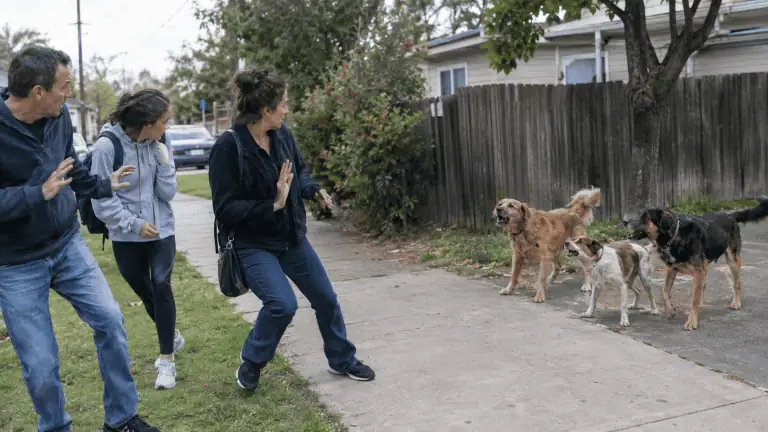
A pack of dogs can cause serious injuries, leaving victims to deal with medical treatment, legal questions, and other consequences....
Read More

One of the first things our clients often say after being hit in a crosswalk is, “I had the right-of-way,...
Read More
Partner with our experienced attorneys and take the first step toward justice.
Get Your Free Consultation
When a family contacts us after losing someone in a collision, one of their first questions usually has nothing to do with the law. They want to understand why this crash turned deadly when so many others end with a dented bumper and a tow truck. The answer almost always comes down to the type of collision: the angle of impact, the speed involved, and how much protection the people inside had from those forces.
There is no single answer to which crash is the most fatal, because it depends on what you measure. Head-on collisions are the most likely to kill when they happen, but they are relatively rare. Single-vehicle crashes, including rollovers and cars that leave the road and hit a tree or pole, account for roughly half of all traffic deaths nationwide. And in dense cities like Los Angeles, side-impact crashes at intersections and collisions with pedestrians claim a heavy share of lives. For grieving families, these differences matter for another reason too: the type of crash often reveals who is legally responsible, and who may owe compensation through a wrongful death claim.
Nationally, the National Highway Traffic Safety Administration estimates that 39,345 people died in traffic crashes in 2024, the first year since 2020 that the total fell below 40,000. California accounts for roughly 4,000 of those deaths in a typical recent year, more than almost any other state.
The numbers have eased from their pandemic-era peak, but many of the habits that took hold when roads emptied out in 2020, particularly speeding and impaired driving, have proven stubborn. Modern safety features have made cars far more survivable, yet they can also give drivers a false sense of security that encourages exactly the kind of risk-taking that turns an ordinary mistake into a fatal one.
A head-on collision stops both vehicles almost instantly. Each car’s front crumple zone has only a short distance to absorb an enormous amount of energy, and occupants are thrown forward with tremendous force, even with airbags and seat belts doing their jobs.
Fortunately, true head-on crashes are uncommon. They tend to happen on undivided two-lane highways, where a driver drifts across the center line or misjudges a pass, and on freeways when a wrong-way driver, very often an impaired one, enters from an off-ramp. Rural head-on crashes carry an added danger: the nearest trauma center may be an hour or more away, and those lost minutes can decide whether a seriously injured person survives.
Rollovers make up a small share of all crashes but a disproportionate share of deaths. A rolling vehicle subjects the people inside to a series of violent impacts rather than just one, and the roof may collapse or windows may shatter as the vehicle tumbles. Anyone not wearing a seat belt faces the gravest danger, because being partially or fully thrown from the vehicle is often fatal.
Most rollovers begin with a loss of control: taking a curve too fast, overcorrecting after drifting onto the shoulder, or catching a tire on a curb or soft dirt, which can “trip” the vehicle onto its side. SUVs and pickup trucks, with their higher centers of gravity, are especially vulnerable.
The driver isn’t always the only one responsible. A rollover caused by a crumbling road edge, a missing guardrail, or a poorly designed curve may point to the government agency or contractor responsible for the road. If the roof crushed inward, a seat belt failed, or a door latch gave way, the vehicle’s manufacturer may share liability under product liability law. Claims against a public agency come with a strict deadline, usually six months, so these cases need attention quickly.
According to the Insurance Institute for Highway Safety, 52 percent of U.S. crash deaths in 2024 happened in single-vehicle crashes. Many of these involve a car that runs off the road and slams into a tree, utility pole, wall, or bridge support. Those objects don’t give way the way another car’s crumple zone does, so the vehicle absorbs nearly all of the force.
These crashes raise a question families often struggle with. When a passenger dies in a single-car crash, the driver may have been a friend, a spouse, or a relative. Many families hesitate to pursue a claim because it feels like turning against someone they care about. In reality, these claims are typically paid by the driver’s auto insurance policy, which exists precisely for situations like this. A wrongful death claim isn’t about punishing anyone. It’s about making sure the family isn’t left to carry the financial weight of a loss they didn’t cause.
Generally, yes. In a broadside or T-bone crash, the front of one vehicle strikes the side of another, and only a door and a few inches of space protect the people on that side. Side-curtain airbags have improved survival rates, but side impacts remain far more dangerous than most rear-end collisions. They happen most often at intersections, typically when a driver runs a red light or turns left into oncoming traffic. You can learn more about how T-bone accidents happen in Southern California.
Rear-end crashes are the most common type of collision, but they’re usually less deadly because the energy is absorbed by the trunk and rear structure. The exceptions are high-speed freeway crashes and crashes involving large trucks. Sideswipes can also turn deadly on the freeway, when the struck car is pushed into another lane, a barrier, or oncoming traffic. Our firm recovered $5,000,000 for clients injured by a driver’s negligent lane change.
The types of crashes vary, but the causes behind them repeat. Speed is among the most common, and IIHS data shows it was a factor in 29 percent of U.S. crash deaths in 2024. Higher speeds leave drivers less time to react and make every impact more violent. Impaired driving is another major factor, because alcohol and drugs dull judgment and slow reaction time. So is distracted driving, which includes not just phones but anything that pulls a driver’s attention from the road. Fatigue and unsafe lane changes round out the list. For a deeper look, see our article on the top causes of car crashes and their impact on victims.
Seat belt use deserves its own mention. Failing to buckle up doesn’t cause a crash, but it can make one fatal. In California, not wearing a seat belt doesn’t automatically bar a family from recovering compensation. The insurance company may argue that the injuries would have been less severe with a belt, which can affect the amount of the claim.
Under California Code of Civil Procedure § 377.60, a wrongful death claim can generally be brought by the victim’s spouse or domestic partner and children. If there are none, it can be brought by the people who would inherit under California law, such as parents or siblings. Certain financially dependent family members may also qualify.
Families often pursue two related claims together. The wrongful death claim compensates the family for its own losses: the financial support the victim would have provided, the value of household services, funeral and burial costs, and the loss of love, companionship, comfort, and guidance. California law doesn’t place a dollar value on grief itself, but the loss of that relationship is compensable. The survival action, brought on behalf of the victim’s estate, recovers what the victim lost before death, such as medical bills, lost earnings, and property damage. In rare cases involving extreme misconduct, punitive damages may also be available.
One recent change is important for families to know. For a few years, California allowed survival actions to include the victim’s pain and suffering before death. That option expired, and under Code of Civil Procedure § 377.34, cases filed on or after January 1, 2026 can no longer recover those damages. Read more about how a wrongful death case is built.
California asks whether a person’s conduct was a “substantial factor” in causing the death, meaning it was more than a remote or trivial cause. More than one person can meet that standard. A speeding driver and a negligent road contractor might both share responsibility for the same crash.
Two related rules often surprise families. If the victim had a pre-existing health condition that made the injuries more severe, the at-fault driver generally can’t use it as an excuse, because the law holds that a negligent driver takes victims as they find them. See how pre-existing conditions affect injury claims. On the other hand, if the victim’s own conduct contributed to the crash, such as speeding, California’s comparative fault rule reduces the family’s recovery by that share.
Proving fault depends on evidence that can disappear fast. At the Law Offices of Eslamboly Hakim, we work quickly to preserve the vehicles themselves, their onboard event data recorders (“black boxes”), surveillance and dashcam footage, and the California Highway Patrol’s crash reconstruction findings before any of it is lost. Families generally have two years from the date of death to file a wrongful death lawsuit in California, but only about six months if a government agency may be responsible. If you’re considering representation, here are questions to ask a wrongful death lawyer at your first consultation.
Los Angeles combines nearly every risk factor on this list. Crowded freeways like the 405, the 5, and the 10 see high-speed rear-end and sideswipe crashes, along with wrong-way drivers late at night. Surface streets bring broadside crashes at busy intersections and a steady toll of pedestrian deaths. Beyond the city, the two-lane mountain and desert highways around Los Angeles County are where head-on and rollover crashes become most common. For more context, see how safe California’s roadways really are.
The Law Offices of Eslamboly Hakim represents families throughout Los Angeles and across California after fatal crashes of every kind.
No settlement can replace the person you lost, but it can relieve the financial pressure that follows a sudden death and give your family room to grieve. Our firm has recovered more than $100 million for injured clients and families, including $15.9 million in a single car accident case, and we work on a simple promise: no recovery, no fees.
For a free, confidential consultation with an experienced wrongful death lawyer, call 1-800-529-8255 or contact us online. The sooner you reach out to us, the sooner we start working for you.
We’re here to ease your stress and guide you through every step of recovery.
Get Support NowSingle-vehicle crashes, including rollovers and cars that run off the road, account for about half of U.S. traffic deaths. Head-on collisions are the most likely to be fatal when they occur, but they happen less often.
Yes. Many people survive rollovers, especially when they’re wearing a seat belt. Unbelted occupants face a much higher risk of being ejected, which is often fatal.
Often, yes. If the driver was negligent, the family can usually pursue a wrongful death claim, which is typically paid by the driver’s auto insurance.
Not for cases filed on or after January 1, 2026. Families can still recover their own losses, including financial support, funeral costs, and the loss of love and companionship.
It doesn’t automatically prevent a claim in California, but the insurance company may argue it made the injuries worse, which can affect the amount recovered.
Generally two years from the date of death. If a government agency may be responsible, a claim usually must be filed within six months.
Tag:
I like the fight – the fight to hold Big Insurance accountable, the fight to find justice for real people, and the fight to level the playing field for...Read More
