 1-800-529-8255
 1-800-529-8255

 Back
Back
 Premises Accident: $90,000 Recovered
 What Is the Most Fatal Type of Car Crash in California?
When a family contacts us after losing someone in a collision, one of their first questions usually has nothing to...
Read More
8730 Wilshire Boulevard, California 90211 
Get Help Now

Request A free confidential case review

Case Results:
Recently Written:

When a family contacts us after losing someone in a collision, one of their first questions usually has nothing to...
Read More

Most people picture a bicycle accident as a car and a cyclist colliding in traffic. But some of the most...
Read More

A wet floor accident can leave you with more than a painful injury. Medical bills, lost income, ongoing treatment, and...
Read More

A lane-splitting accident can leave motorcycle riders with serious injuries, medical bills, lost income, and other financial losses. So, what...
Read More

A pack of dogs can cause serious injuries, leaving victims to deal with medical treatment, legal questions, and other consequences....
Read More
Partner with our experienced attorneys and take the first step toward justice.
Get Your Free Consultation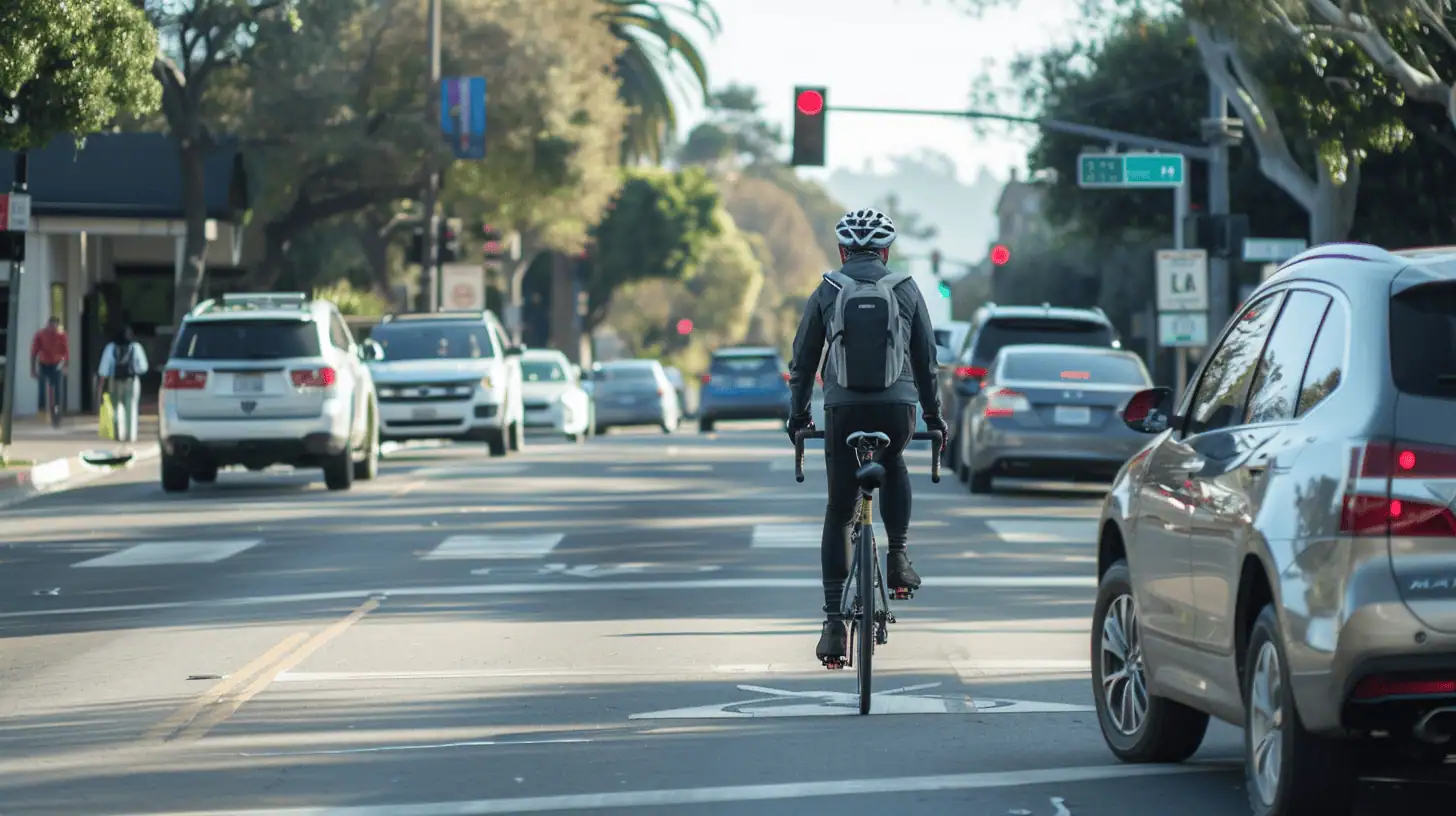
Since California has one of the highest numbers of cyclists per capita in the country, lawmakers take care to protect riders. These laws, which protect daily commuters, recreational cyclists, and e-bikers, apply on roads, bike lanes, and shared pathways.
Preserving and expanding these laws is an ongoing fight. As cycling continues to grow across California, lawmakers have adopted laws designed to improve rider safety and reduce collisions. These protections help cyclists and motorists share the road more safely while establishing clear rules for everyone who uses California’s streets and highways.
A Los Angeles bicycle accident lawyer advocates for victims before and after their accidents. Pre-accident advocacy means working for favorable laws that make post-accident advocacy easier. These two efforts help ensure maximum compensation for victims.
The first thing to understand is that, under California law, bicyclists generally have the same rights and responsibilities as motorists.
Cyclists can legally use the traffic lanes of all public roads, unless a freeway specifically prohibits bicycles. Likewise, riders must obey traffic signals, stop signs, lane markings, and right-of-way rules just like drivers.
Perhaps most importantly, bicyclists have the same protections against negligent drivers as operators and passengers in four-wheel vehicles. Motorists who endanger cyclists often face traffic citations, criminal penalties, or, most importantly for our purposes, liability claims.

One of the most important protections for cyclists in California is the “Three Feet for Safety Act.” California Vehicle Code Section 21760 requires drivers to leave at least three feet of clearance when passing a bicycle traveling in the same direction.
If there is not enough room to safely pass, drivers must slow down and wait until it is safe. In many cases, motorists may legally cross a double yellow line to provide the required passing distance when safe to do so.
This law helps reduce side-swipe accidents and unsafe close passes, which are among the leading causes of bicycle crashes. More importantly for a Los Angeles bicycle accident lawyer, a violation of the three-foot law may serve as strong evidence of negligence in a bicycle accident claim.
If a driver violated this law and injured you, call the Law Offices of Eslamboly Hakim at 1-800-529-8255 for a free consultation today.
State law-mandated designated bike lanes also protect bicyclists. Drivers are generally prohibited from driving in bike lanes except for limited situations such as parking, entering driveways, or preparing for turns.
Motorists who block bike lanes can receive citations, especially in busy urban areas like Los Angeles and San Diego where bike commuting is common.
These laws provide two protections. They give bicyclists a safe place to operate, so riders do not have to be afraid of collisions. Additionally, designated bicycle lanes reduce traffic congestion for bicyclists, making it easier for them to ride.
Designated lanes do not imprison bicycle riders. Cyclists are also allowed to leave bike lanes when necessary to avoid hazards, pass slower riders, prepare for turns, or avoid unsafe road conditions.
Most cycling laws that protect riders in California target careless or reckless motorists. Others impose safety requirements on riders.
Bicycle helmet laws, which exist in almost every jurisdiction, are a good example. A few states have universal bicycle helmet laws. But in the Golden State, the helmet requirement (or lack thereof) depends on the rider’s age and bicycle type.
These rules are especially important because California has seen rapid growth in e-bike usage in recent years, especially in dense urban areas.
California night riders must have specific safety equipment. A bicycle operated after dark (usually thirty minutes after sunset) must include:
Regardless of the time of day, California law also requires bicycles to have functioning brakes strong enough to make at least one wheel skid on dry pavement.
Many people think to look both ways before they cross the street. But many people do not think to look both ways before they open vehicle doors.
California’s anti-dooring law helps protect cyclists from suddenly opened car doors. Drivers and passengers cannot open a vehicle door unless it is reasonably safe and does not interfere with traffic, including bicycles.
Dooring accidents are common on crowded city streets and can cause severe injuries. Compensation for these injuries usually includes money for economic losses, such as medical bills, and noneconomic losses, such as pain and suffering.
According to popular myth, when operating in regular traffic lanes, bicycles must always stay far to the right. This practice is usually the safest approach. However, California law allows cyclists to “take the lane” when necessary for safety. A cyclist may legally ride in the center of a lane when:
This protection prevents unsafe squeezing by motorists and improves cyclist visibility. Sideswipe accidents often occur when drivers attempt to squeeze past cyclists without enough room, and poor visibility is a leading cause of bicycle accidents. Many drivers simply are not looking out for small, slower-moving bicycles.
The law looks out for bicyclists because, in many cases, drivers are not looking out for them.
California has some of the strongest cycling protection laws in the country. But laws alone do not guarantee justice. When a negligent driver, a poorly maintained road, or a defective bicycle component causes an accident, victims need someone in their corner who knows how to use these laws to their advantage.
At the Law Offices of Eslamboly Hakim, we fight for injured cyclists across Los Angeles, Orange County, Riverside, San Bernardino, San Diego, and the San Joaquin Valley. We handle every detail of your case so you can focus on recovering.
For a free consultation with a bicycle accident lawyer in Los Angeles, contact the Law Offices of Eslamboly Hakim. We do not charge upfront legal fees in these matters.
Do not wait. Evidence fades and deadlines are strict. Call 1-800-529-8255 today for a free consultation. Virtual, home, and hospital visits are available.
We’re here to ease your stress and guide you through every step of recovery.
Get Support NowYes. If a driver’s negligence caused the crash, an injured cyclist may pursue compensation for medical expenses, lost income, pain and suffering, and other damages under California personal injury law.
Generally, yes. California law gives cyclists many of the same rights and responsibilities as motorists when riding on public roads, including the right to use traffic lanes and the right to be free from negligent driving.
The law requires drivers to leave at least three feet of space when passing a cyclist. A violation can be strong evidence of negligence if a collision occurs.
California generally requires helmets for riders under 18. Adults are usually not legally required to wear one, but helmet use can still help reduce injury severity and may become an issue during an insurance claim.
In most cases, you have two years from the date of the accident to file a personal injury lawsuit. Claims involving a government entity may have much shorter notice deadlines.
Get medical care, call law enforcement, photograph the scene, collect witness information, and avoid discussing fault with insurers before speaking with a lawyer. Prompt action helps preserve evidence and protect your claim.
Tag:
I like the fight – the fight to hold Big Insurance accountable, the fight to find justice for real people, and the fight to level the playing field for...Read More
