 1-800-529-8255
 1-800-529-8255

 Back
Back
 Premises Accident: $90,000 Recovered
 How to Find Your Car Accident Lawyer If You Lost All Contact Information
Many victims panic if they cannot immediately contact their lawyers. Panic often leads to chain reaction thinking (I can’t find...
Read More
8730 Wilshire Boulevard, California 90211 
Get Help Now

Request A free confidential case review
Case Results:
Recently Written:

Many victims panic if they cannot immediately contact their lawyers. Panic often leads to chain reaction thinking (I can’t find...
Read More

Bicycle accidents, especially in areas like Los Angeles, are on the rise. When compared with vehicle-on-vehicle accidents, bicycle-on-vehicle accidents often...
Read More

Investigators aren’t sure why a pedestrian was in one of the northbound 110 lanes on October 30, 2025. Investigators are...
Read More

Investigators believe that alcohol intoxication was a factor in a September 14, 2025, crash that seriously injured a half-dozen motorists...
Read More

Mostly thanks to advancing technology, fatal airplane accidents are very rare. However, statistics don’t comfort people who lose friends or...
Read More
Partner with our experienced attorneys and take the first step toward justice.
Get Your Free Consultation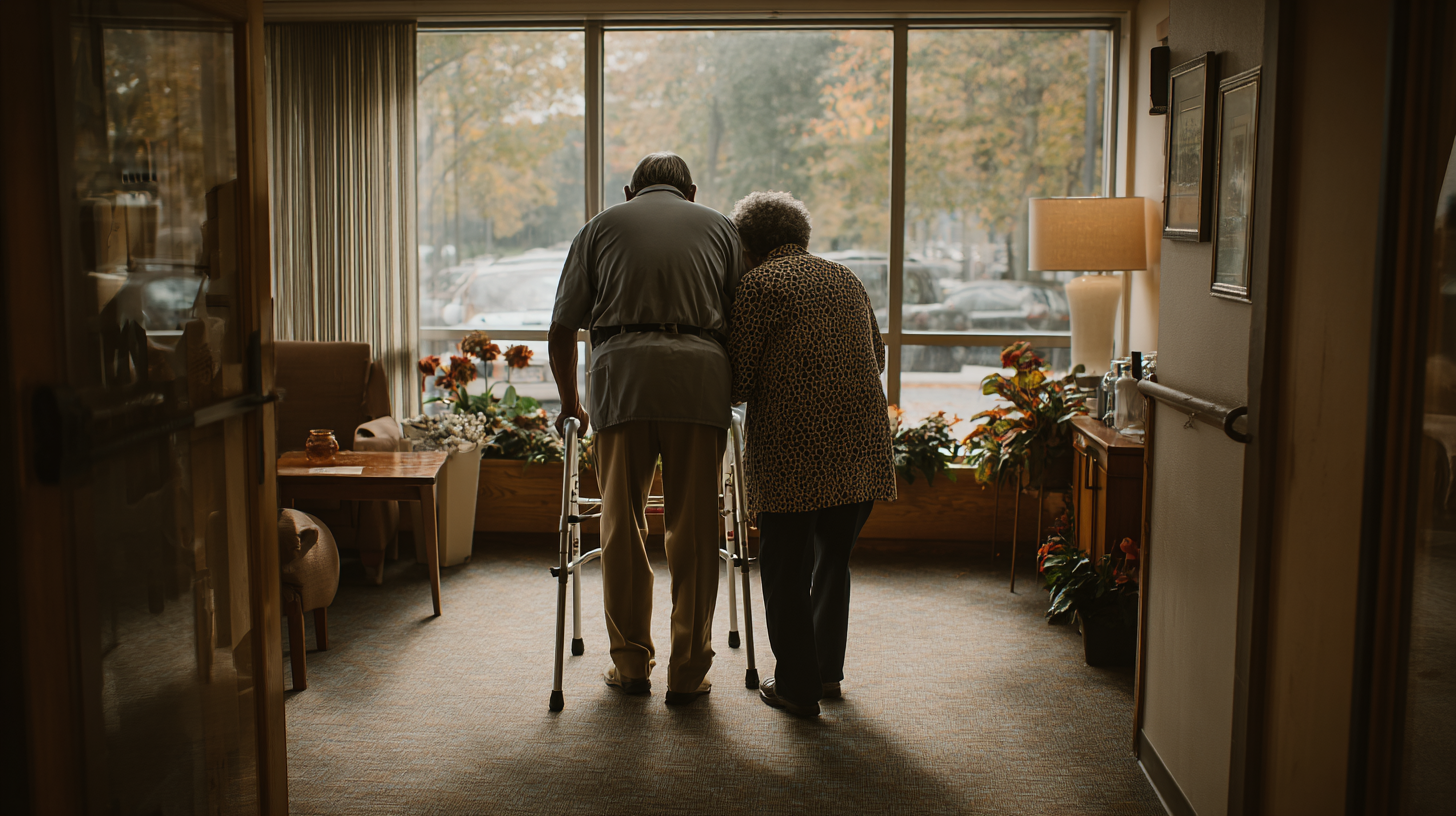
Yes, nursing homes are liable (legally responsible) for falls. Nursing homes have a duty of care to provide safe and secure environments, especially when vulnerable people, like older adults in poor health, are concerned. If a breach of care causes injury, the nursing home is liable for damages (compensation).
Common breaches of fall safety care in nursing homes include floor hazards, like wet spots, and dark walkways. A nursing home employee could be a fall hazard as well. More on that below.

If negligence causes a fall or another serious injury, a Los Angeles Slip and Fall Injury Lawyer can obtain the compensation a family needs and deserves. This compensation usually includes money for economic losses, such as medical bills, and non-economic losses, such as pain and suffering.
Falls are a serious issue at nursing homes. These injuries are one of the leading causes of nursing home admissions. Additionally, about two-thirds of residents sustain serious falls. These incidents cause serious physical injuries, such as:
Broken Bones: A fall often shatters a hip or another vital joint. Such serious broken bones are bad enough for younger people who are generally in good health. If the victim is older and in poor health, the bone never fully heals and the victim often permanently loses mobility and independence.
Internal Injuries: The extreme motion of a fall causes internal organs to jostle and grind against each other. Since these organs don’t have protective skin layers, a slight abrasion bleeds profusely. Such excessive internal bleeding (exsanguination) is difficult to spot and even more difficult to stop.
Infections: The combination of broken bones, internal injuries, and other injuries often overwhelm the body’s immune system. Infections are especially common in hospitals and clinics, which are basically breeding grounds for bacteria. Usually, a Los Angeles personal injury lawyer files a separate action to obtain compensation for infection-related injuries.
Nursing home falls also cause serious emotional injuries. Many fall injury victims are so afraid of falling again that they basically become prisoners in their own rooms. Ironically, the lack of exercise degrades their muscles, making another fall more likely.
Because of these serious physical and emotional injuries, most nursing home fall victims cannot live independently ever again.
If a physical hazard causes a fall, the property owner duty of care usually applies. Factors to consider include:
In a nursing home, seemingly minor physical hazards could cause serious falls. Many older adults have poor vision and cannot see hazards, especially in the dark. Additionally, many older people shuffle their feet when they walk. So, if they trip, they fall instead of recovering their balance.
If a person causes a fall (e.g. Tom pushes Mike), the nursing home could also be liable for injuries, usually under the negligent hiring or negligent supervision doctrines.
Negligent hiring is failing to perform qualified people, such as people with considerable nursing home experience, to perform a certain job. Negligent supervision is a failure to watch employees and take appropriate corrective action when necessary.
Comparative fault, in one form or another, may be the most common defense in nursing home slip-and-fall matters. A Los Angeles personal injury lawyer must anticipate defenses, like comparative fault, to obtain the largest possible settlement.
Sometimes, comparative fault is, quite simply, a victim’s failure to watch where s/he was going. Nursing home owners have a duty of care, and nursing home residents have a responsibility to look out for their own personal safety.
A warning sign, such as “Caution Wet Floor,” could also trigger the comparative fault defense. Victims who ignore warning signs proceed at their own peril.
The law is the same in both instances. The court must divide fault on a percentage basis (60-40, etc.) between the two parties. California is a pure comparative fault state. If the victim is 99 percent responsible for a fall, the other party must pay a proportionate share of damages.
Vision and walking inhibitions, which we mentioned above, often come into play in these situations. Many older people cannot see or avoid floor hazards. Neither can they read warning signs, once again especially in low-light conditions.
Nursing home fall matters are very complex. For a free consultation with an experienced California personal injury attorney, contact the Law Offices of Eslamboly Hakim. We do not charge upfront legal fees in these matters.
We’re here to ease your stress and guide you through every step of recovery.
Get Support NowYes. Nursing homes have a duty to provide a safe environment, and they are liable if a breach of care causes a resident’s fall.
Common injuries include broken bones, internal bleeding, infections, and serious emotional trauma that often prevents residents from living independently again.
A nursing home is liable if the fall results from negligent hiring or negligent supervision of its employees.
Fault is divided by percentage. In California’s pure comparative fault system, even if the resident is 99% at fault, the nursing home must still pay its share.
Yes. Ignoring signs like “Caution Wet Floor” can trigger the comparative fault defense and reduce the victim’s compensation.
Tag:
I like the fight – the fight to hold Big Insurance accountable, the fight to find justice for real people, and the fight to level the playing field for...Read More
